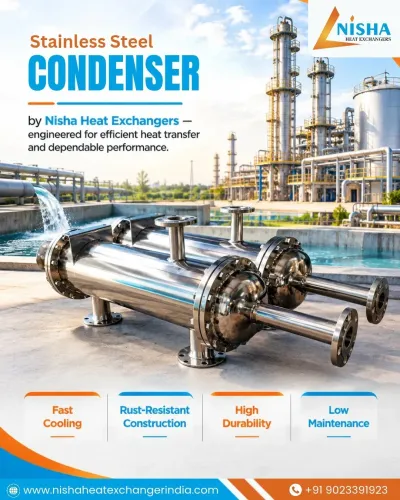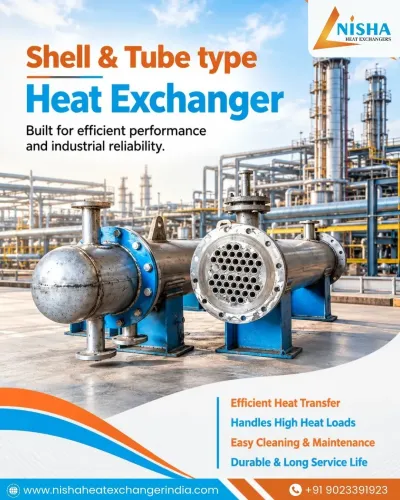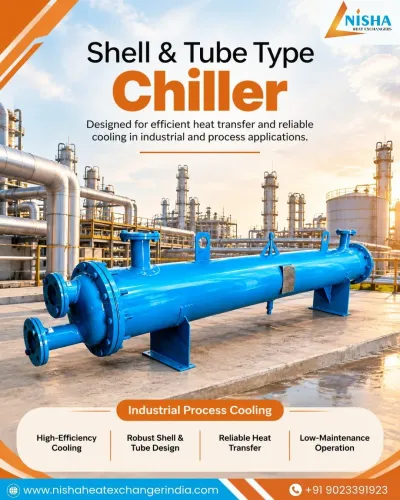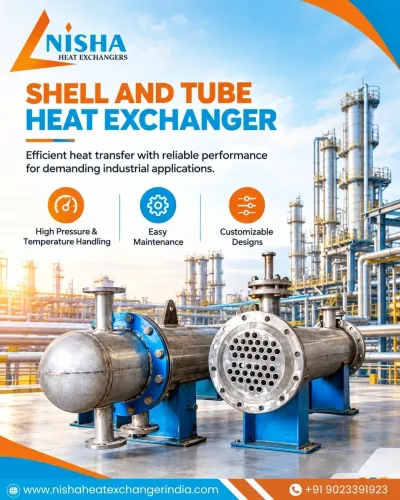
Are you looking for an efficient heat transfer solution for your industrial refrigeration or cooling system? A DX condenser plays an important role in direct expansion (DX) refrigeration systems by removing heat from the refrigerant and helping maintain reliable cooling performance.
The right condenser supports effective heat rejection, stable operation, and better energy management. Whether you are planning a new refrigeration installation or upgrading existing equipment, understanding condenser features, benefits, and applications can help you make an informed decision.
Nisha Heat Exchangers offers heat exchanger solutions for industrial applications. In this guide, we explain what a DX condenser is, how it works, its key features, major benefits, industrial applications, and the factors to consider when choosing suitable equipment.
If you are searching for a DX condenser Manufacturer in Ahmedabad, a DX condenser Supplier in Gujarat, or a DX condenser Distributor in India, this guide will help you understand the essential considerations before purchasing.
What Is a DX Condenser?
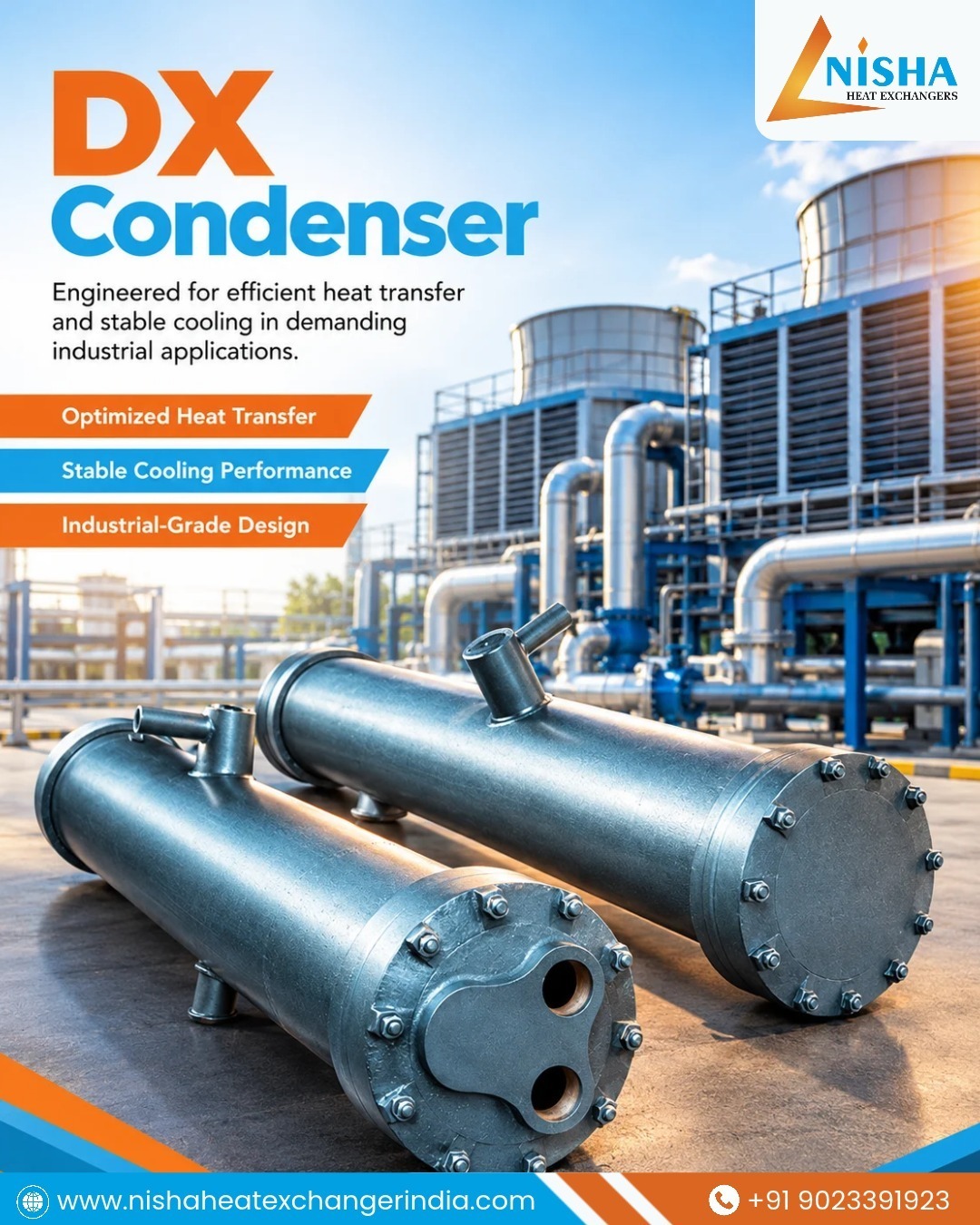
A DX condenser is a heat rejection component used in a direct expansion refrigeration system. It removes heat from the refrigerant after compression, allowing the refrigerant vapour to condense into liquid before returning to the expansion device.
In a typical DX refrigeration cycle, the refrigerant absorbs heat in the evaporator. The compressor then increases the refrigerant's pressure and temperature. The hot refrigerant enters the condenser, where it transfers heat to air or another cooling medium.
After releasing heat, the refrigerant condenses into liquid and continues through the refrigeration cycle.
DX refrigeration systems are commonly used in air conditioning, commercial refrigeration, industrial cooling, cold storage, and other temperature-control applications.
It is important to understand that DX refers to the refrigeration arrangement rather than one specific condenser construction. The condenser's design depends on the refrigerant, cooling capacity, operating pressure, cooling medium, and intended application.
How Does a DX Condenser Work?
A DX condenser operates as part of the vapour-compression refrigeration cycle. Its primary purpose is to reject heat from the refrigerant efficiently.
The process generally involves the following stages:
1. Refrigerant Compression
The compressor receives refrigerant vapour from the evaporator and raises its pressure and temperature.
2. Hot Refrigerant Enters the Condenser
High-pressure, high-temperature refrigerant vapour flows into the condenser.
3. Heat Transfer Takes Place
The condenser transfers heat from the refrigerant to the surrounding air or another suitable cooling medium.
4. Refrigerant Condensation
As heat is removed, the refrigerant changes from vapour to liquid at the applicable operating pressure. Depending on the design, the process may also include desuperheating and liquid subcooling.
5. Refrigerant Returns to the Cooling Cycle
The liquid refrigerant moves toward the expansion device and evaporator, where the refrigeration cycle continues.
A DX condenser's performance depends on its heat transfer area, refrigerant properties, cooling-medium temperature, airflow or water flow, and operating conditions.
A properly selected condenser helps the refrigeration system maintain suitable condensing conditions and supports reliable performance.
Key Features of a DX Condenser
When choosing a DX condenser for industrial or commercial use, businesses should evaluate the following features.
1. Efficient Heat Transfer
Efficient heat transfer is essential for removing heat from the refrigerant. A well-designed condenser provides the heat-transfer area and flow conditions needed to meet the system's heat-rejection requirements.
2. Reliable Cooling Performance
A correctly sized condenser supports stable operating conditions across the expected range of cooling loads and ambient temperatures.
3. Suitable Construction Materials
Condenser materials may include copper, aluminium, stainless steel, carbon steel, or other suitable materials, depending on the design. Material selection should account for refrigerant compatibility, operating pressure, corrosion exposure, and service conditions.
4. Air-Cooled and Water-Cooled Options
Depending on the application, a condenser may reject heat to ambient air or circulating water.
* Air-cooled condensers: Use airflow across heat transfer surfaces, often with fans.
* Water-cooled condensers: Transfer heat to circulating water or another suitable liquid through a heat exchanger.
The correct configuration depends on site conditions, utility availability, maintenance requirements, and system design.
5. Pressure and Temperature Compatibility
The condenser must be designed for the specified refrigerant, operating pressure, design temperature, and applicable safety requirements.
6. Maintenance-Friendly Design
Provide access for inspection, cleaning, and servicing to maintain heat transfer performance and reduce avoidable downtime.
7. Application-Specific Engineering
Condenser capacity, dimensions, connections, materials, and construction should match the system's technical requirements. Base equipment selection on verified operating conditions rather than physical size alone.
Major Benefits of a DX Condenser
A suitable DX condenser supports reliable refrigeration performance and effective heat management.
1. Effective Heat Rejection
The condenser removes heat from the refrigerant, enabling the refrigeration cycle to continue and supporting the required cooling process.
2. Improved System Performance
Appropriate condenser sizing and heat transfer characteristics help maintain suitable condensing pressure and support consistent refrigeration operation.
3. Potential Energy Savings
A correctly selected and maintained condenser may help avoid unnecessarily high condensing pressures and reduce compressor workload. Actual energy savings depend on the entire refrigeration system, ambient conditions, controls, and operating practices.
4. Reliable Industrial Operation
Matching condenser capacity to the application helps reduce problems associated with inadequate heat rejection or unsuitable operating conditions.
5. Flexible Installation Options
Different condenser configurations can accommodate various cooling capacities, installation spaces, operating environments, and process requirements.
6. Long-Term Operating Value
A correctly selected, installed, and maintained condenser can support dependable operation and predictable maintenance planning throughout its service life.
Industrial Applications of DX Condensers
DX condensers are used in refrigeration and cooling systems across several industries.
1. Commercial Air Conditioning
Commercial buildings, offices, retail spaces, and other facilities use compatible DX systems to maintain comfortable indoor temperatures.
2. Industrial Refrigeration
Manufacturing plants and industrial facilities use refrigeration equipment for process cooling and temperature-controlled operations.
3. Food Processing and Cold Storage
Refrigeration systems support temperature management in food processing facilities, cold storage units, and other parts of the cold chain.
4. Pharmaceutical and Laboratory Facilities
Suitable refrigeration systems help maintain required temperatures in laboratories and pharmaceutical environments. Select equipment based on the specific process and operating requirements.
5.HVAC and Process Cooling
DX condensers are used in compatible heating, ventilation, and air-conditioning systems, as well as industrial processes requiring heat removal.
6. Refrigeration Equipment Manufacturing
DX condensers are used in compatible refrigeration units, packaged cooling equipment, and other vapour-compression systems.
Final equipment selection should account for refrigerant type, cooling capacity, heat-rejection requirements, ambient conditions, and applicable safety standards.
Neither design is automatically better for every application. The decision should consider local climate, water availability, installation costs, maintenance needs, energy consumption, and total operating cost.
How to Choose the Right DX Condenser
Choosing the right DX condenser is essential for achieving suitable heat transfer performance and reliable operation. Consider these factors before purchasing.
1. Determine the Required Heat Rejection Capacity
Establish the refrigeration load and the condenser's required heat rejection capacity. In a typical vapor-compression system, the condenser rejects both the heat absorbed in the evaporator and the energy added by the compressor.
2. Confirm Refrigerant Compatibility
Identify the refrigerant used in the system and verify that the condenser's materials, pressure rating, and design are suitable for it.
3. Evaluate Operating Conditions
Consider the expected ambient temperature, condensing temperature, operating pressure, and changes in cooling load.
4. Select the Appropriate Cooling Medium
Determine whether air-cooled or water-cooled heat rejection best fits the site's available utilities, installation environment, and maintenance capabilities.
5. Review Space and Installation Requirements
Check equipment dimensions, service clearance, piping connections, airflow requirements, and maintenance access.
6. Consider Energy Consumption
Evaluate fan power for air-cooled designs and pumping requirements for water-cooled systems. Assess condenser performance alongside compressor energy consumption.
7. Check Safety and Technical Documentation
Request the product datasheet, design pressure, design temperature, material details, applicable compliance documentation, and recommended maintenance schedule.
8. Evaluate After-Sales Support
Review warranty conditions, spare-part availability, service arrangements, and the manufacturer's ability to provide relevant technical assistance.
Before finalising your purchase, provide the supplier with the refrigerant type, required heat rejection capacity, operating pressures, design temperatures, cooling medium, and site conditions.
DX Condenser Manufacturer in Ahmedabad
If you are searching for a DX condenser Manufacturer in Ahmedabad, evaluate product suitability, technical specifications, material quality, and manufacturing documentation.
Nisha Heat Exchangers can be contacted to discuss condenser and heat exchanger requirements for industrial applications. Buyers should confirm whether the available product configuration is specifically designed for their intended refrigeration system.
Before purchasing, request:
* Product specifications and technical datasheets.
* Heat rejection capacity and design conditions.
* Material details and pressure ratings.
* Relevant inspection and compliance documentation.
* Warranty and maintenance information.
* A quotation based on your project requirements.
These details help you assess whether a condenser suits your installation.
DX Condenser Supplier in Gujarat
Businesses looking for a DX condenser Supplier in Gujarat should compare suppliers based on technical suitability, product documentation, commercial terms, and support availability.
A suitable supplier should help clarify the operating limits of the proposed equipment and provide the information needed for technical evaluation.
When requesting a quotation, share the following details:
* Refrigerant type.
* Required heat rejection capacity.
* Operating and design pressures.
* Design temperatures and ambient conditions.
* Preferred cooling medium.
* Installation and maintenance requirements.
Providing accurate information helps suppliers evaluate the application and recommend an appropriate product configuration.
DX Condenser Distributor in India
If your business is searching for a DX condenser Distributor in India, prioritise equipment compatibility, product availability, technical documentation, warranty terms, and after-sales support.
The right condenser depends on the specific refrigeration system, required capacity, operating conditions, and installation environment.
Contact Nisha Heat Exchangers to discuss your requirements and confirm available product configurations, supply arrangements, and delivery details.
Before placing an order, ensure that the proposed condenser meets your engineering specifications and applicable safety requirements.
Why Choose Nisha Heat Exchangers?
Selecting industrial heat transfer equipment requires careful consideration of technical performance, application requirements, and long-term maintenance.
Nisha Heat Exchangers can be contacted to discuss heat exchanger and condenser requirements for your project. When evaluating a solution, consider the following points:
* Technical suitability: Verify that the proposed equipment matches the intended refrigeration application.
* Product documentation: Review specifications, design conditions, and relevant compliance documents.
* Material compatibility: Confirm that the materials are appropriate for the refrigerant and operating environment.
* Application requirements: Share accurate details about capacity, pressure, temperature, and cooling medium.
* Maintenance planning: Review inspection intervals, cleaning requirements, and service accessibility.
* Commercial clarity: Confirm pricing, delivery timelines, warranty conditions, and available support directly with the company.
For DX refrigeration applications, it is particularly important to confirm that the proposed condenser is designed for the intended refrigerant and operating conditions. Not every industrial heat exchanger is automatically suitable for refrigerant condensation.
Frequently Asked Questions (FAQs)
1. What is a DX condenser?
A DX condenser is a heat rejection component in a direct expansion refrigeration system. It removes heat from high-pressure refrigerant vapour, allowing the refrigerant to condense into liquid before returning to the expansion device.
2. What is the main function of a DX condenser?
Its main function is to transfer heat from the refrigerant to air or another cooling medium, allowing the refrigerant to condense and continue through the refrigeration cycle.
3. How does a DX condenser work?
The compressor sends high-pressure, high-temperature refrigerant vapour into the condenser. The condenser removes heat, allowing the refrigerant to condense into liquid before it flows toward the expansion device and evaporator.
Keywords